My UX strategy and design process at NASA Jet Propulsion Laboratory spanned the full design lifecycle, from user research and interviews that surfaced real user stories, to wireframing, prototyping, usability testing, and the development of clear personas and workflows. I collaborated closely with developers and fellow designers to turn insights into usable, elegant solutions. Below are examples of how I bring this process to life in Figma.
Planetary Cloud/Aerosol Research Facility (PCARF)
R&D: Brainstorming & Card Sorting
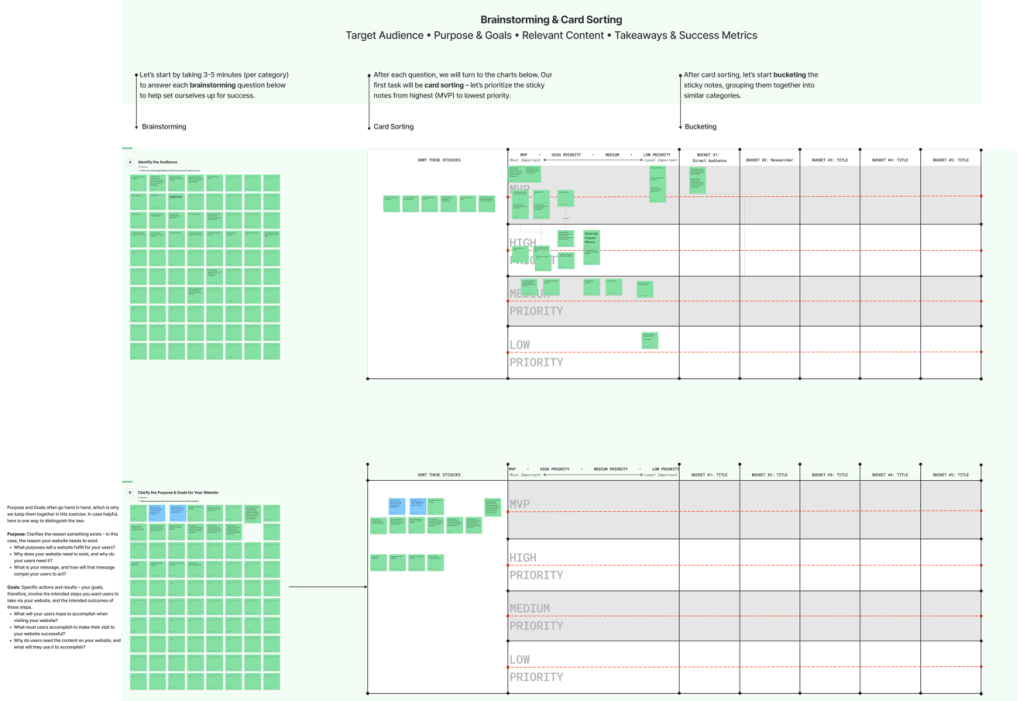
For this smaller project, the UX process for the PCARF website began with focused R&D, brainstorming, and card-sorting sessions. We aligned on target audiences, clarified purpose and goals, organized key content, and defined clear takeaways and success metrics to guide the design from the outset.
Site Plan: Summary, Objectives & Key Results
Insights from the brainstorming and card-sorting exercises were synthesized into a clear, actionable site plan. I translated the team’s ideas into a concise summary, defined the primary objectives, and outlined the key results those objectives were designed to achieve, creating a shared roadmap to guide design and decision-making.

Information Architecture (IA) & User Flow
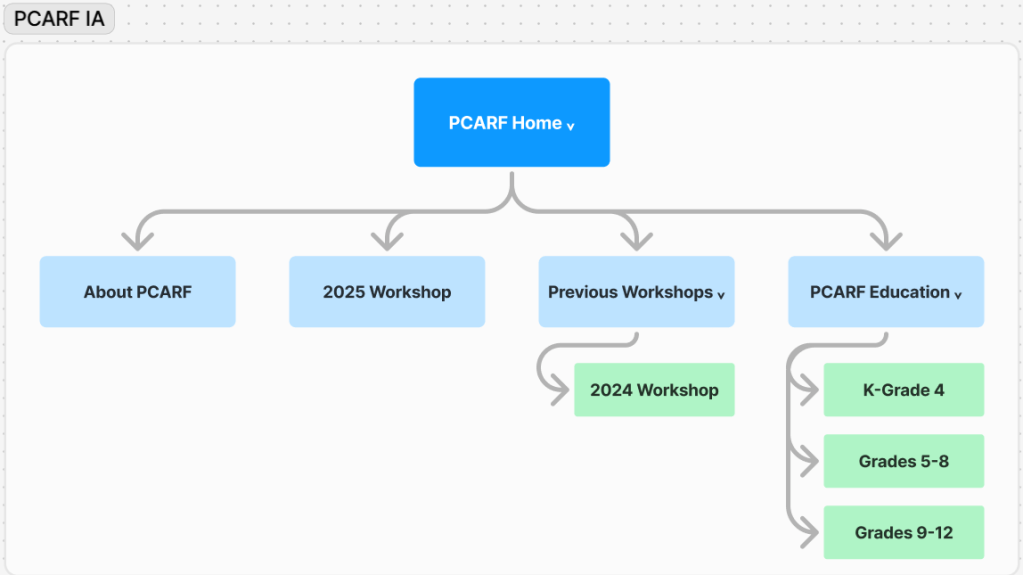
Alongside the site plan, I developed a recommended information architecture and mapped the end-to-end user flow for the website. I then walked the PCARF team through how users would navigate the site, ensuring structure, content, and interactions aligned with both user needs and project goals.
Site Buildout (Wagtail CMS)
Once the PCARF team approved the design, I translated strategy into execution by building the site in Wagtail using JPL’s CMS framework. This phase wasn’t simply about implementation. Rather, it ensured the information architecture, user flows, and content hierarchy held up in a real-world environment, resulting in a scalable, easy-to-maintain site that clearly communicated purpose and made complex information accessible to its audiences.

 Ryan Smernoff